
Origins and teachings: A sphere drawn
with circles.
Where the AllSphyr came from, and the geometry Nathan Skyhorse builds it on: one interlocking system, from a pendant held in the hand to a sculpture that changes a room.
- Created by
- Nathan Skyhorse
- Made across
- Object · sculpture · space

The beginning
One question became a system.
What if volume could be built through circles rather than straight struts?
In 2010 Nathan was commissioned to build a large bamboo dome. The straight members of a geodesic dome did not sit with the curves he saw in nature, so he drew the dome again in curves. On Nikola Tesla’s birthday in 2012 he unveiled the AllSphyr: rings that hold one another in tension and balance until they enclose a sphere.
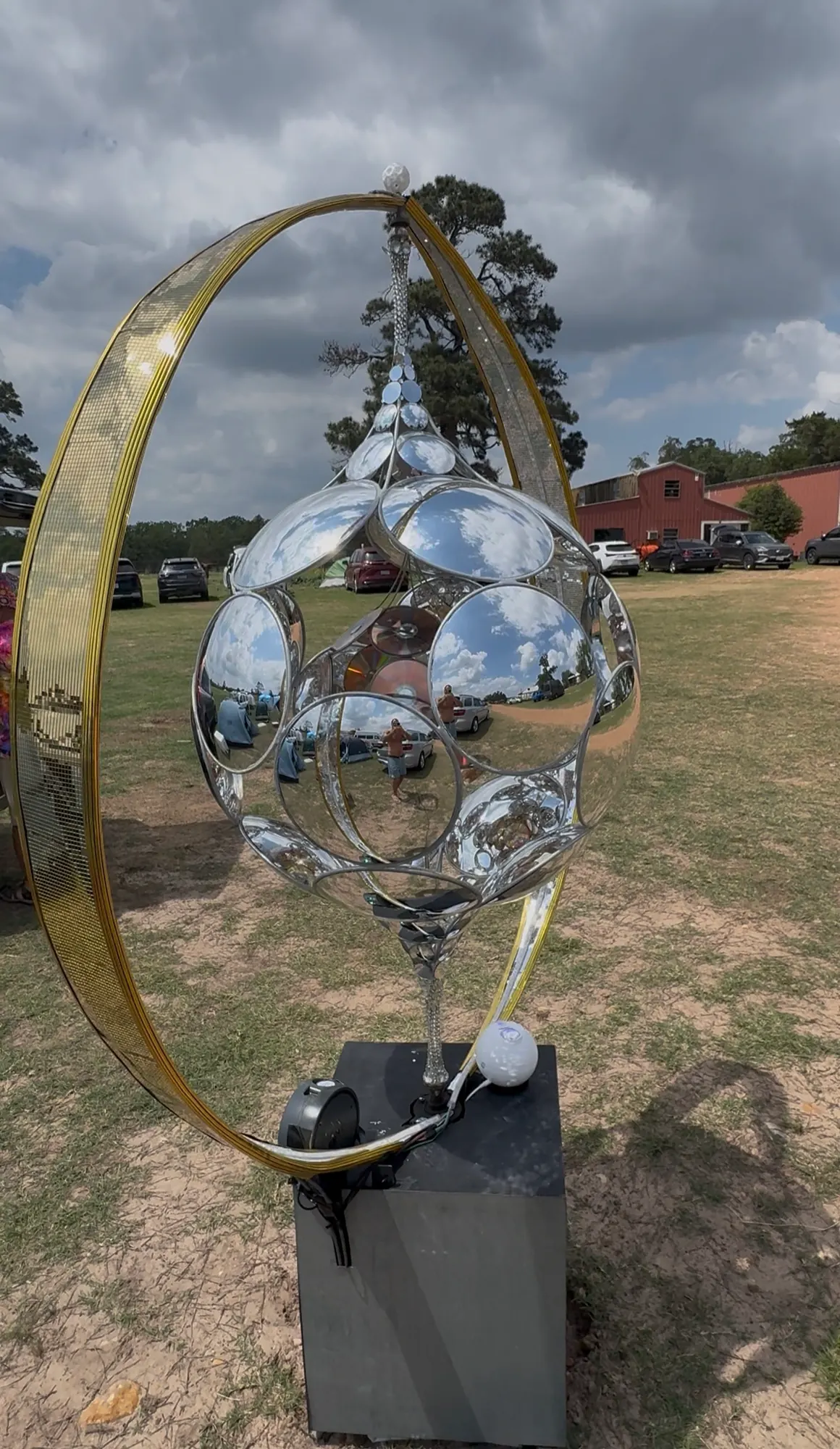
The form changes as you move: openings overlap, edges disappear, and reflection pulls the surrounding world into the object.
Teachings
Geometry becomes an encounter.
The AllSphyr is a way of building as much as a form. Four lessons trace it from a single circle to the same proportions at every scale.
Lesson 01
Circles into volume
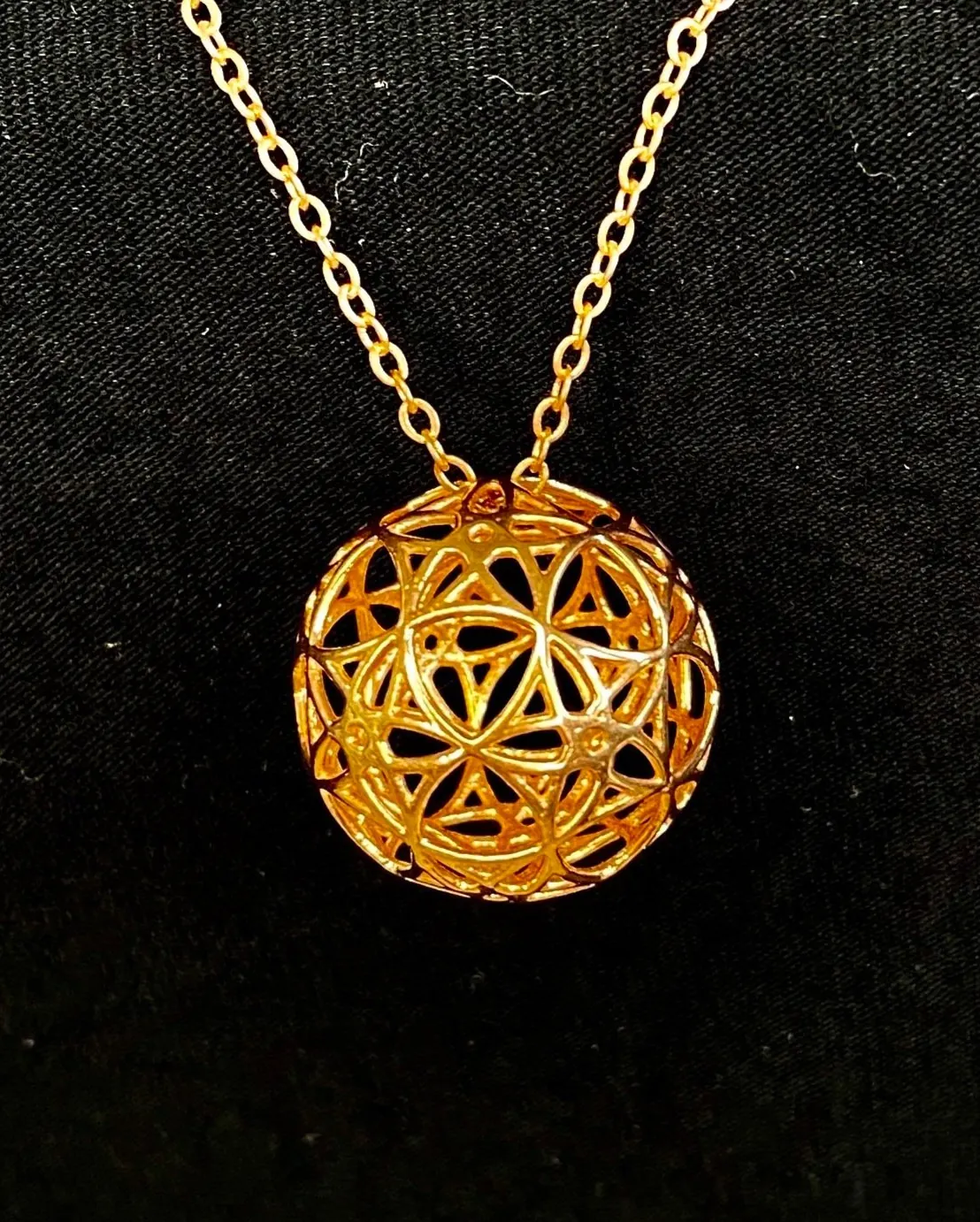
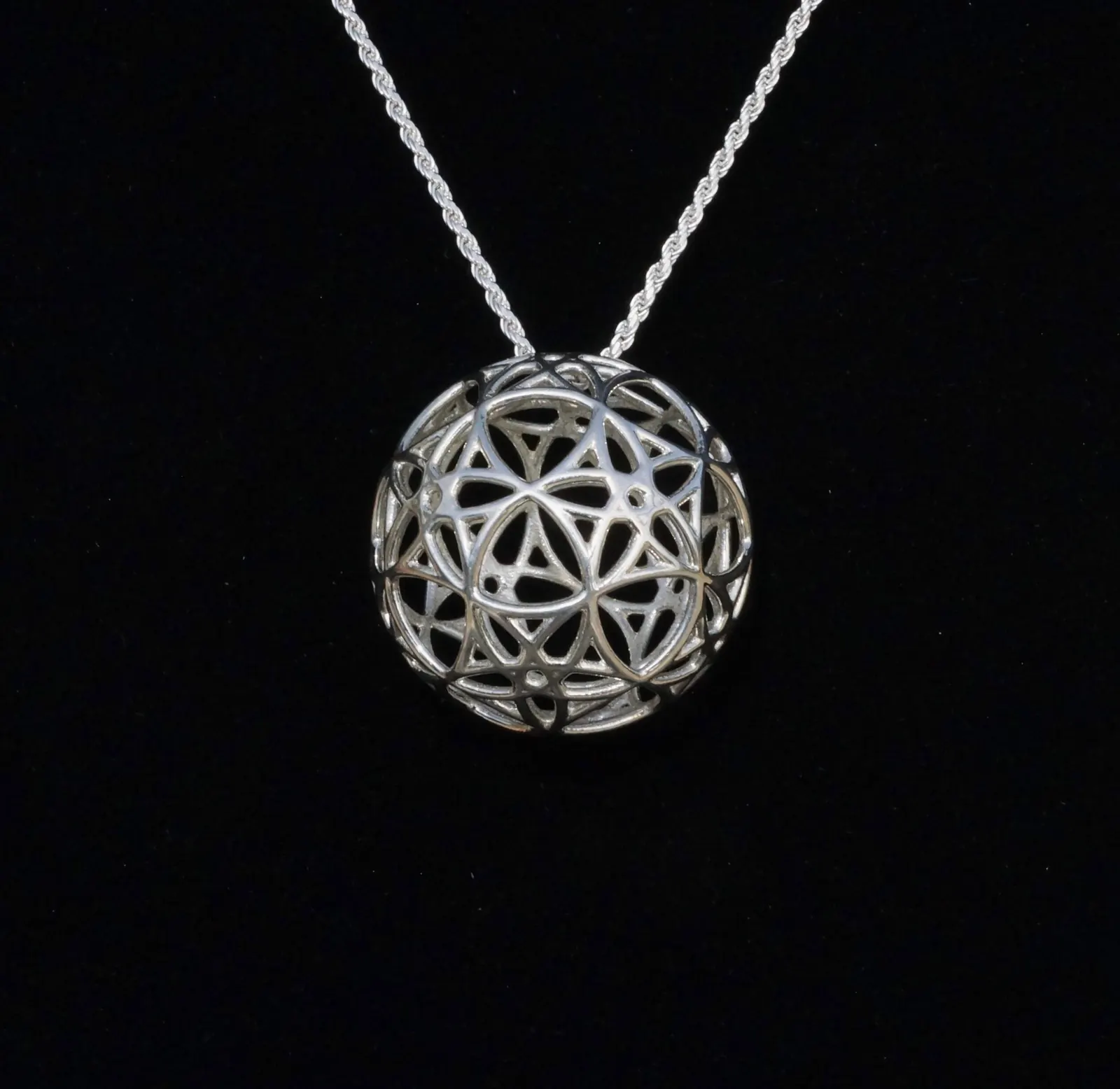
Most structure is built from straight members meeting at joints. The AllSphyr began with a different question: how to build volume through circles. Twenty rings, each crossing the others at regular intervals, hold one another in place until a sphere appears, with twelve pentagons opening between them.
Lesson 02
Interdependence
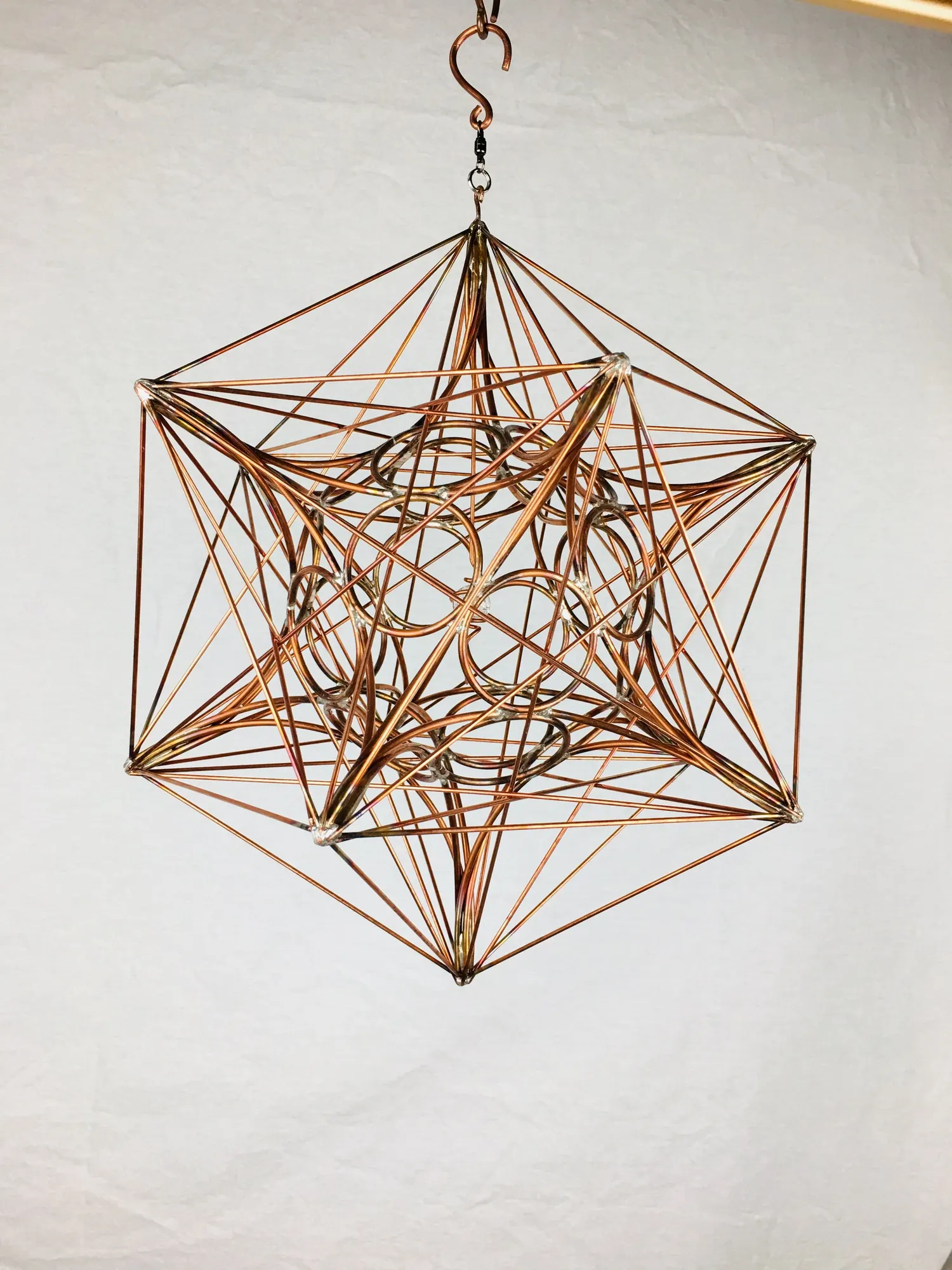
No single ring describes the whole. Each holds the others, and the form exists only in their relationship: between circles, materials, light, architecture and the person moving around it. The same is true of what the pieces reflect, which is why a mirrored sphere reads differently in every room it enters.
Lesson 03
Reflection and movement
The surfaces return whatever surrounds them: sky, water, architecture, and the people gathered around. As a viewer moves, openings become overlaps and edges disappear. The geometry is less a diagram than an encounter.
Lesson 04 · One grammar, many scalesWear it.
Wear it.
Live with it.
Build around it.
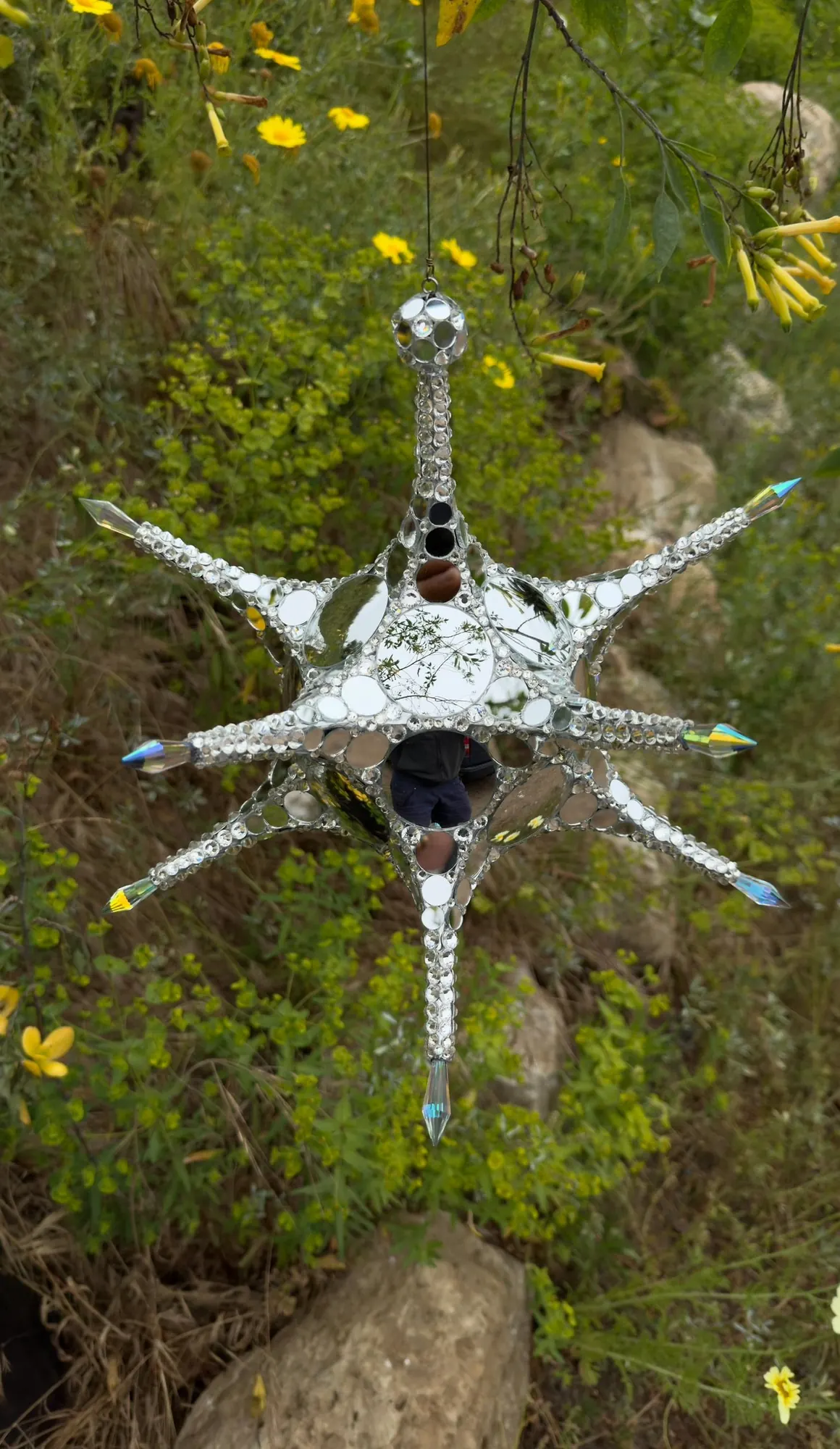
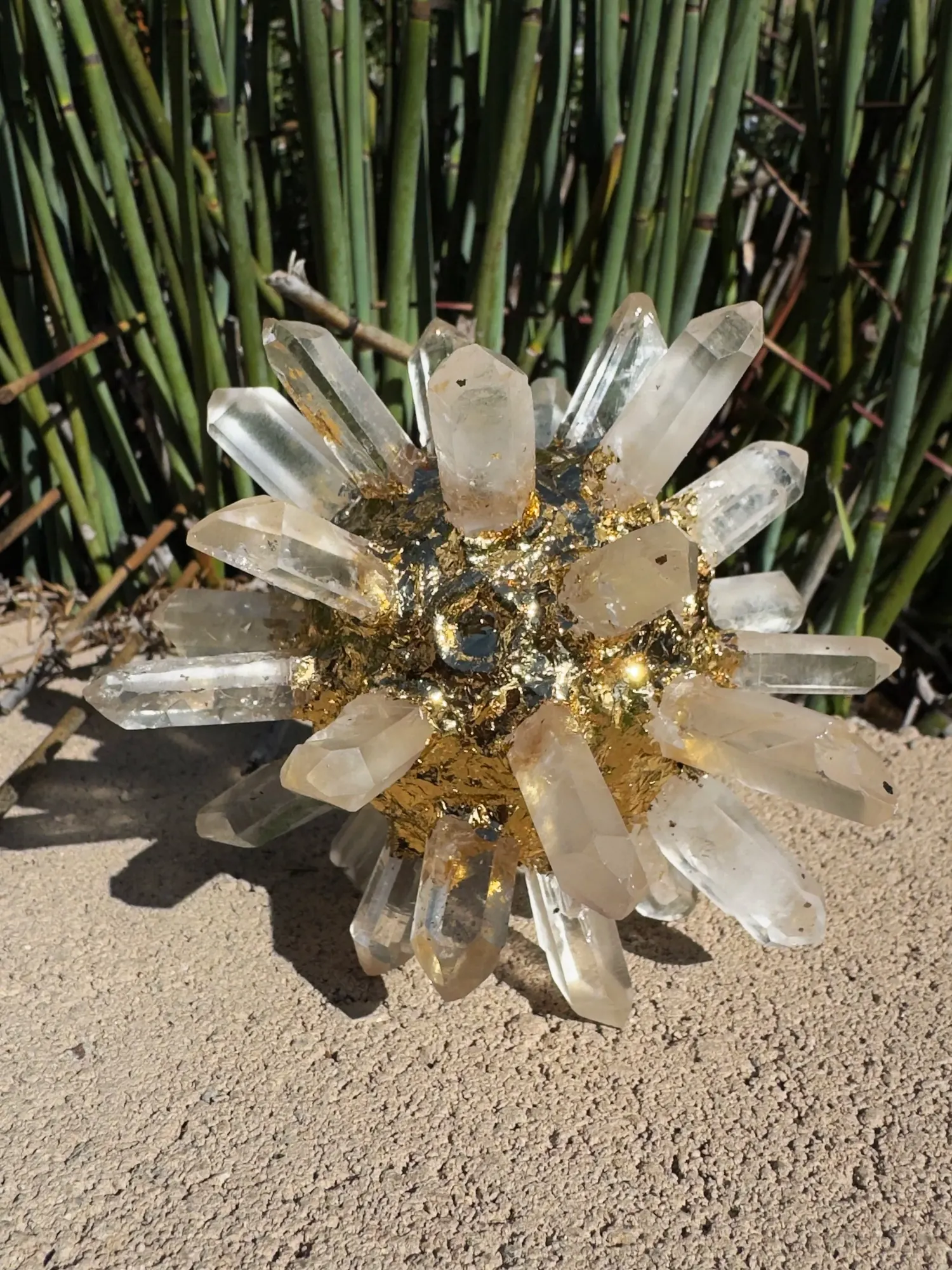
At intimate scale the geometry becomes a pendant; at room scale, collectible sculpture and a luminous center; at architectural scale, a framework for commissions and gatherings. The proportions hold at every size.
In Nathan’s words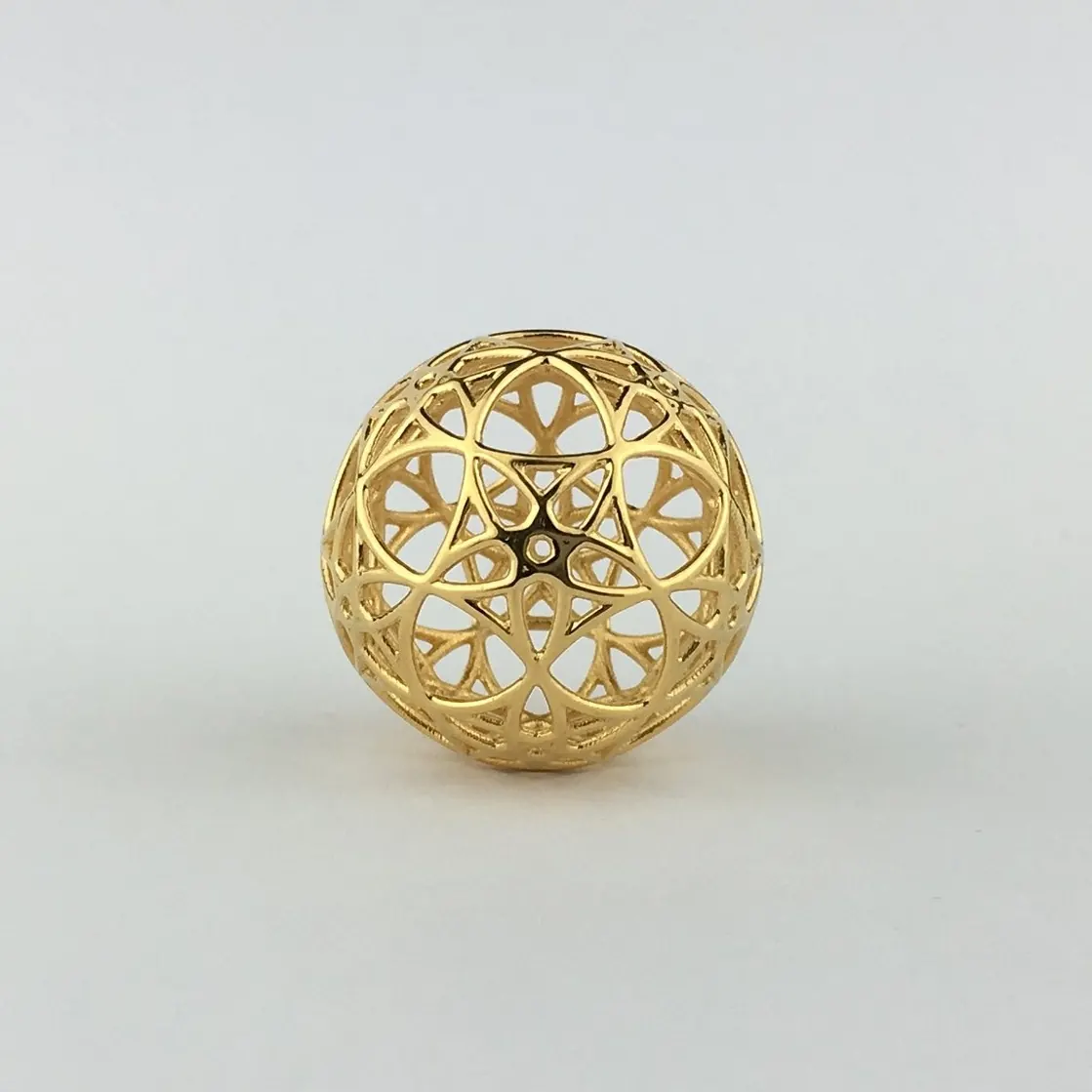
How the artist reads the form.
His own philosophy of the work, as he tells it. It describes what he sees in the geometry, not what a piece does.
Nathan sees in the AllSphyr the two-dimensional symbols that cultures and faiths have drawn for the sacred, the Flower of Life, the Star of David, the Tree of Life and Metatron’s Cube among them, carried into three dimensions: each of them can be found in its rings.
He describes the geometry as a balance of two qualities he calls feminine and masculine: spiraling flow and linear stability, the light and the dense. He works with the torus as the picture of that balance, a flow that turns inward and outward through its own center, and sees the same pattern at every scale, from the branching of a tree to the arms of a spiral galaxy.
He reads the prophet Ezekiel’s vision of “a wheel within a wheel”, its rims “full of eyes all around”, as rings that pass through one another, their crossings forming lens-shaped eyes along every rim, rather than as the star tetrahedron that is usually drawn as the Merkaba.
For Nathan the AllSphyr is a reminder to slow down and be present, and an opening to curiosity and wonder about the patterns of nature. He talks through the geometry on the AllSphyr YouTube channel (opens YouTube).
In the world
The room becomes part of the work.
At Wynn Palace, the Fractal MirrorSphyr is the central feature of the hotel’s Gourmet Pavilion, beneath a bronze palm-frond canopy. Its mirrored geometry gathers the room, the people, and every change in light into one continually shifting surface.
See the installation
The artistNathan
Nathan
Skyhorse.
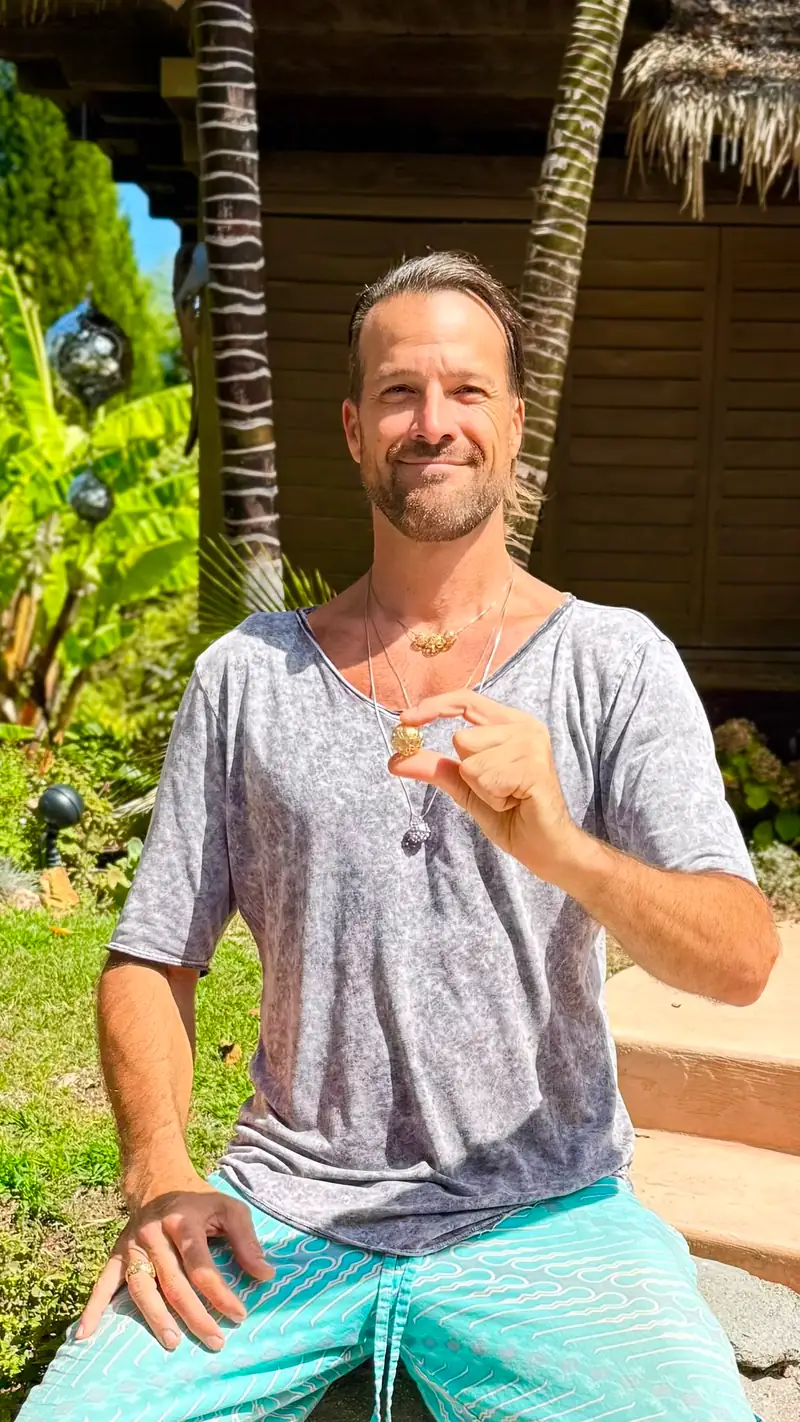
An artist and creative director working across sculpture, geometry, and spatial experience.
Raised among the forests, lakes, and rivers of Wisconsin, Nathan began in construction and design: remodeling houses, designing boutiques in Chicago, and building for the Summer X Games in Los Angeles and Mexico. Sacred geometry and natural materials drew him on to bamboo temples, earth mandalas and other structures built on nature’s forms.
His large-scale installation work has been at Burning Man every year since 2013 and at Catharsis on the Mall in Washington, D.C. The practice moves between objects held in the hand and works that organize a room, a gathering, or a shared point of attention.
For selected events, Nathan serves as creative director in collaboration with Bliss Productions (opens the Bliss Productions site), integrating sculpture, light, performance, and guest movement into one production.
Visit Nathan Skyhorse Arts (opens Nathan Skyhorse Arts site)Choose your scale